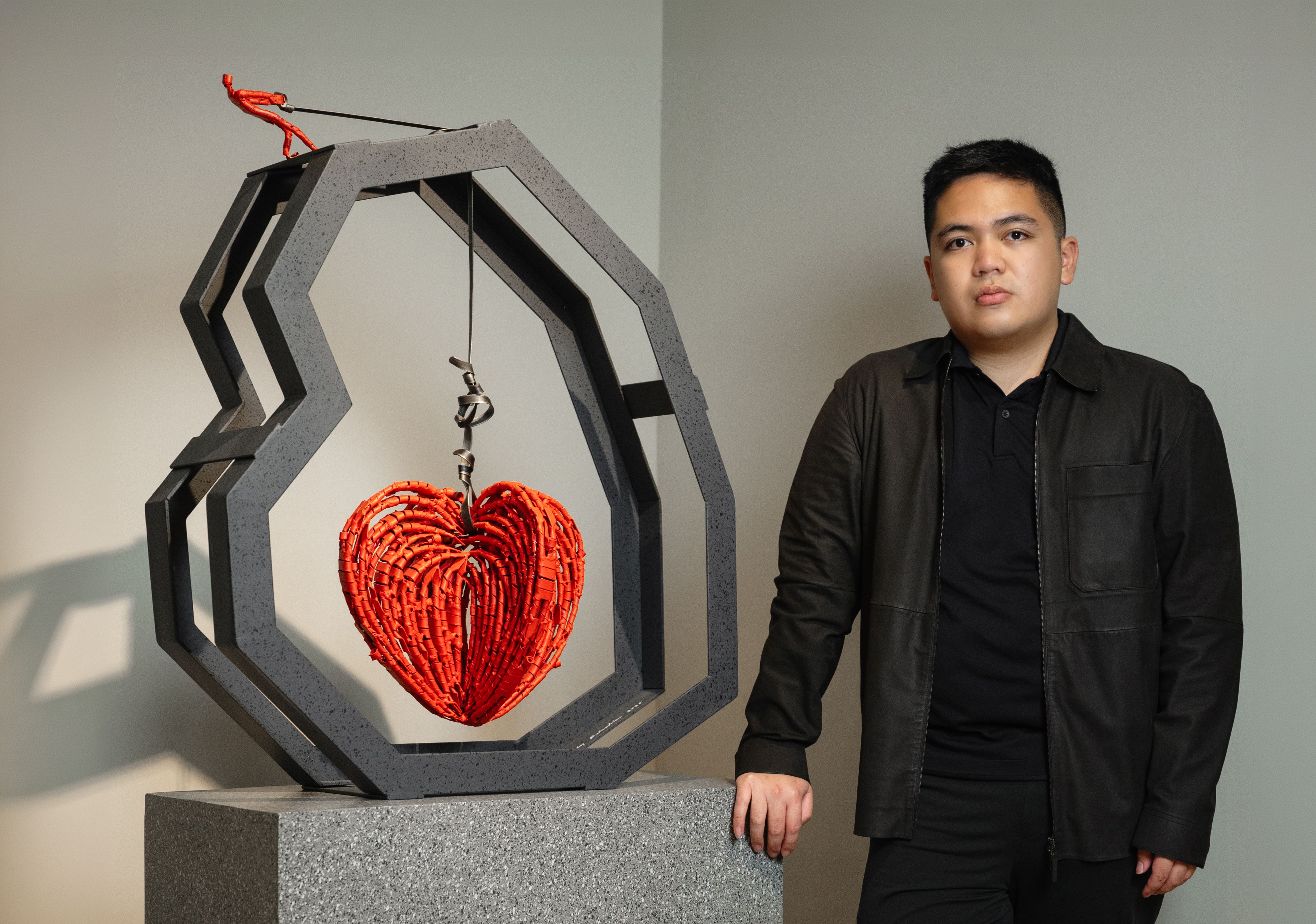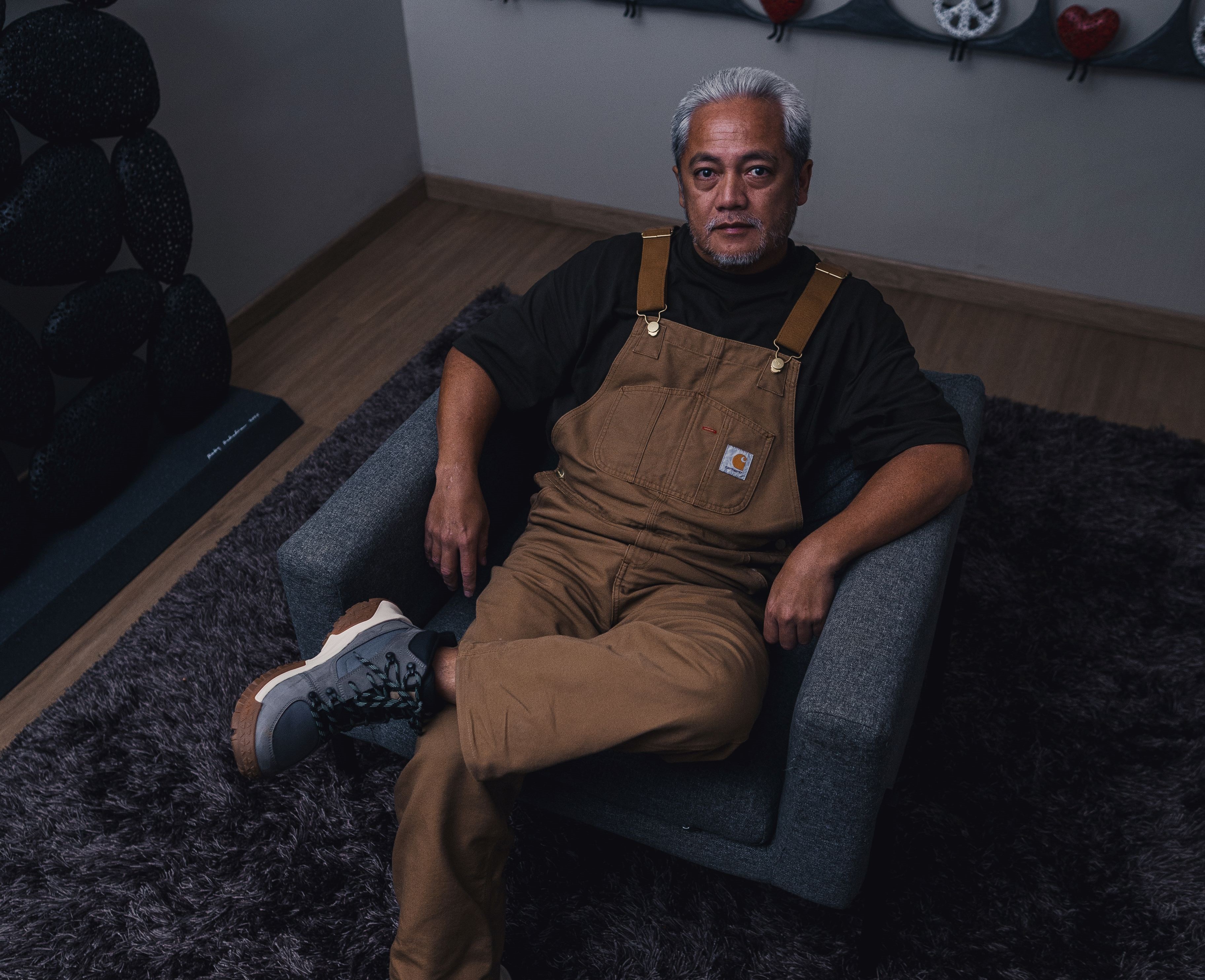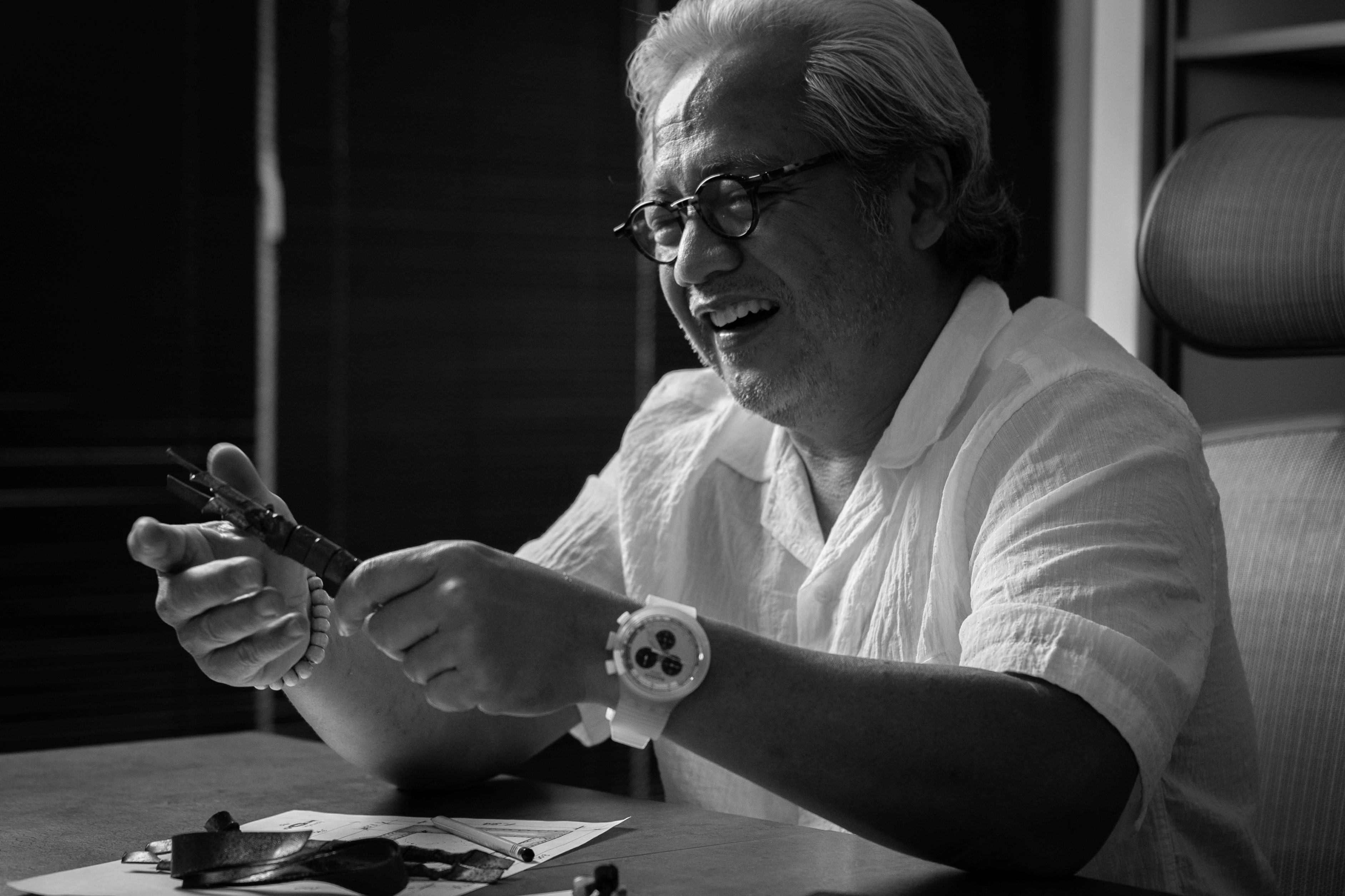
Redy Rahadian was born on 17 May 1973 in Cianjur, West Java, Indonesia. Though his eventual path would lead him toward fine art sculpture, his earliest formal training emerged not from the studio but from the workshop. That biographical fact, the entry into art through the disciplines of metallurgy and welding rather than through painting or drawing, has shaped every aspect of his subsequent practice.
Rahadian's foundational training took place at the Institut Saint Joseph in Brussels, Belgium, where he studied Mechanical Engineering within the Mecanique Garage Department, specialising in metal welding technology. The unusual nature of this educational background, formal training in metallurgy and structural engineering rather than in the studio arts, would prove decisive. The technical literacy acquired in Brussels, including command of MIG (semi-automatic), TIG (high-precision), and SMAW (stick) welding processes, became the bedrock upon which his subsequent sculptural vocabulary was built.
Rahadian committed to a full-time artistic practice in 1997. The decision marked a deliberate redirection of his engineering training into the language of fine art, an act of translation rather than departure. The disciplines internalised through his Belgian training, tolerance, joinery, structural integrity, and material behaviour, became the formal vocabulary of an emerging sculptural practice grounded in the human figure.
What gradually emerged across his early years of practice was a technical and conceptual approach unlike that of any contemporary sculptor in Indonesia or the wider region. Rahadian began to construct his sculptures from small, individually handcrafted iron human figures, each welded free-hand without moulds or casts, accumulating into larger sculptural compositions.
The methodology is laborious and irreplicable. A single large work may comprise thousands of these miniature figures, each a discrete sculptural unit, each contributing to the cumulative form of the whole. Every figure is a singular soul; together, they constitute the gesture, body, or movement of the larger sculpture. The conceptual proposition is direct: that strength, presence, and form arise from the union of countless individual contributions. This signature technique would, across the following two decades, become his most internationally recognised contribution to contemporary Southeast Asian sculpture.
Rahadian's first solo exhibition, Intensitas (2005), was subsequently described as the show that consolidated the visual and technical direction of his work. It was followed by Interarction (2007) at Edwin's Gallery, Jakarta, and Heavy Metal Stories (2008) at Galeri Nadi, the latter the subject of an extended December 2008 feature in Tempo magazine by the curator and critic Asikin Hasan.
In the same year, Tempo recognised Rahadian as one of the leading metal sculptors of his generation, an early institutional acknowledgement that placed him within a small group of Indonesian artists working at the intersection of technical mastery and conceptual ambition. His participation in Manifesto at the Galeri Nasional Indonesia (2008), the landmark group exhibition commemorating the centenary of the National Awakening, situated his practice within the wider arc of Indonesian art history.
A solo presentation at the Beijing Art Fair (2009) with Nadi Gallery extended his visibility into China. Subsequent solo exhibitions, including Indonesiaku (2012) at Mon Décor Gallery, traced the continuing development of his sculptural language. In 2025, the retrospective Presence Unfold marked twenty-eight years of practice and presented new works from the Dragon Series, his ongoing engagement with East Asian symbolic traditions reinterpreted through the human-figure welding language he had refined since the late 1990s.
Rahadian's work entered the international auction market early in his career. He is among the youngest Indonesian sculptors, and one of the youngest in Southeast Asia, whose works have been auctioned and sold at both Christie's and Sotheby's Fine Art Auctions. His works appeared regularly across Christie's Hong Kong Asian Contemporary Art Day Sales between 2008 and 2014, and across Sotheby's Hong Kong Modern and Contemporary Southeast Asian Art sales from 2009 onwards. Notable results include Guardian II, sold at Christie's Hong Kong in November 2009 at a hammer record of HKD 187,500, and Strength, sold at Sotheby's Hong Kong in October 2009 at HKD 175,000. This sustained presence at the region's two most rigorous auction houses across multiple consecutive years marks an institutional validation reached by relatively few sculptors of his generation working in Southeast Asia.
Alongside his exhibition and auction trajectory, Rahadian has produced a body of significant public and architectural commissions. The most monumental of these is Terbang Tinggi (Fly High), permanently installed in the main lobby of The Apurva Kempinski Bali in 2019. The work, executed in painted steel and measuring 700 × 400 × 120 cm, stands among the largest contemporary sculptures publicly sited within the Indonesian luxury hospitality sector.
Earlier commissions include works at Sentul City Highland, Bogor (2012); Pakuwon City, Surabaya (2007); and Sun Plaza, Medan (2004), the last following his win in a 2003 public sculpture competition. He was also commissioned to design the Metro TV Eagle Award sculpture trophy in 2003. These commissions trace a parallel history to his exhibition career: a sustained engagement with sculpture at architectural and civic scale, and a comfort with monumental form that few of his contemporaries match.
Rahadian's practice has been the subject of sustained Indonesian and international media coverage. Recent feature articles have appeared in Kompas.com, Liputan6.com, and Rubrik Properti (2025), each examining different facets of his quarter-century of practice and the conceptual development of the Dragon Series. His work is documented on Artsy, Artnet, MutualArt (with 122 catalogued works), Artprice, and Invaluable, alongside entries in the Indonesian-language Wikipedia and Wikidata. This breadth of documentation reflects both the maturity of his practice and the institutional infrastructure that has accumulated around it across two decades.
Rahadian works exclusively in metals: steel, iron, stainless steel, aluminium, copper, and painted steel. His scale ranges from intimate table-top works to monumental installations of up to fifteen metres. All compositions are constructed entirely free-hand, without moulds, casting, or pre-fabricated armatures. The process is, by design, slow. A monumental work may take months to complete, the sculpture accumulating component by component through the artist's continuous physical engagement. This temporal dimension, the literal record of time embedded within each surface, is integral to what the work asks of its viewer.
Approaching three decades of disciplined sculptural practice, Rahadian continues to develop his vocabulary across new bodies of work, including the Dragon Series, the Heart Series, and the Black & White Series, each extending the human-figure language toward new symbolic and formal territories. His work occupies a singular position within Indonesian and Southeast Asian contemporary sculpture: technically rigorous, emotionally precise, and rooted in a philosophical conviction that the strength of any whole is constituted by the dignity of its parts.
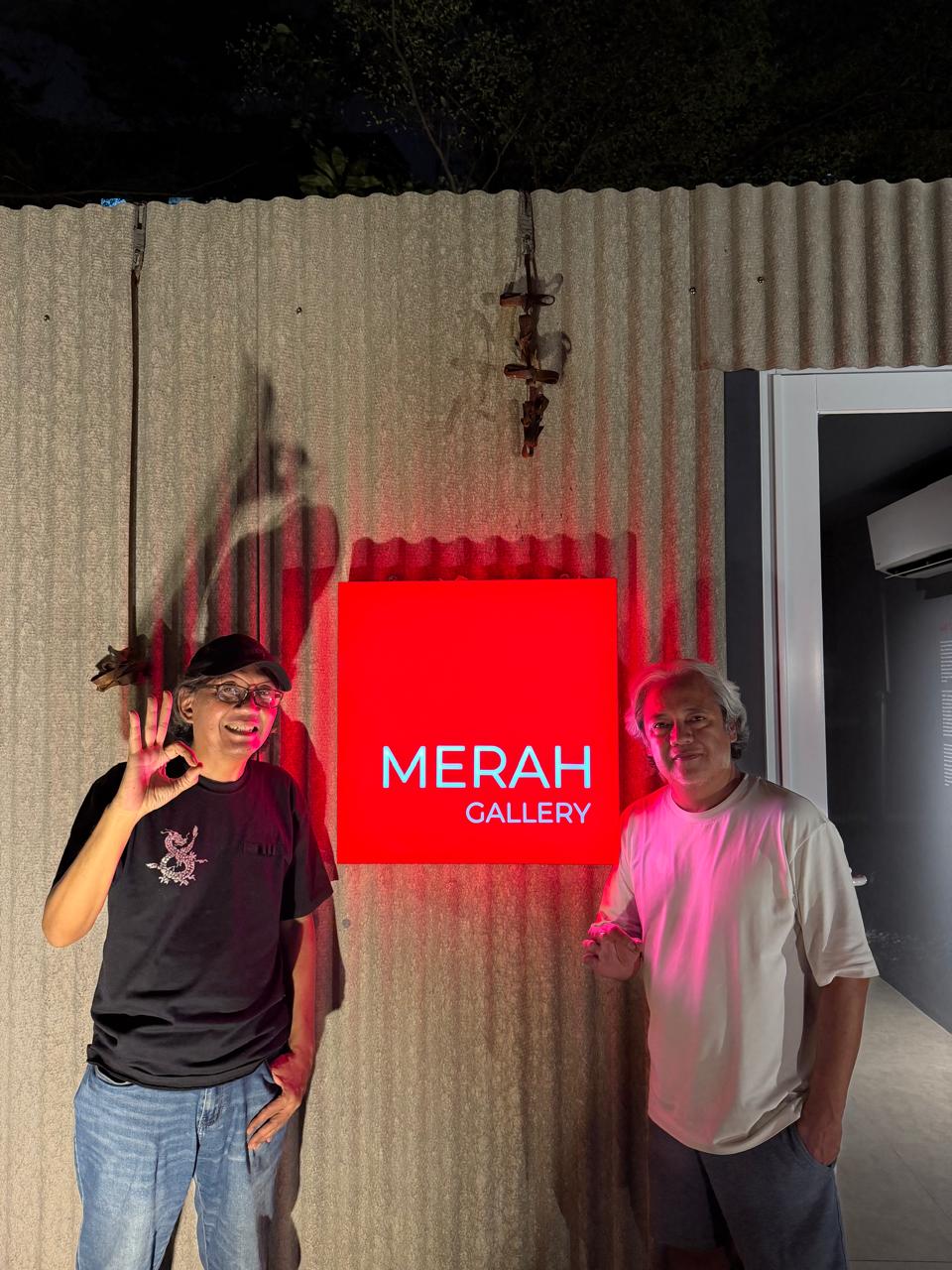
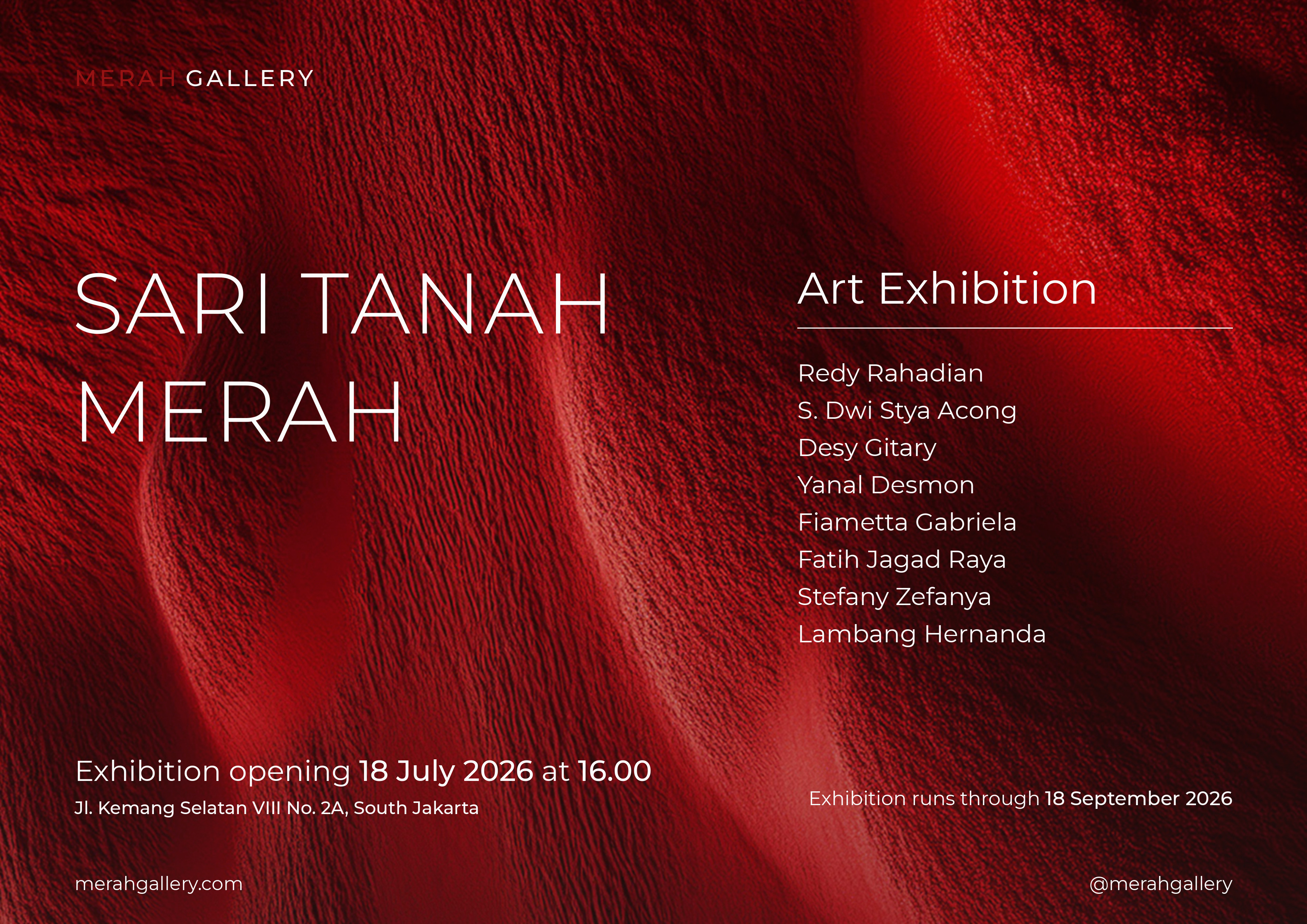
Redy Rahadian is represented by Merah Gallery, with locations in Jakarta and Bali.
Merah Gallery JakartaJl. Kemang Selatan VIII No. 2A, Bangka, South Jakarta 12730
Merah Gallery BaliJl. Subak Belaki No. 60A, Sukawati, Gianyar 80582
Enquiries regarding the artist's work, exhibitions, and forthcoming projects may be directed to the gallery.
Email info@merahgallery.com WhatsApp +62 8111 0100 917 Website www.merahgallery.com Instagram @redyrahadian.art

P : +62 8111 0100 917 (Whatsapp)
A : Jl. Kemang Selatan VIII No.2A,
South Jakarta 12730.
A : Jl. Subak Belaki No.60A, Sukawati,
Gianyar, Bali 80582.
H : Monday to Sunday, 10am to 5pm
Download Gallery Profile.png)