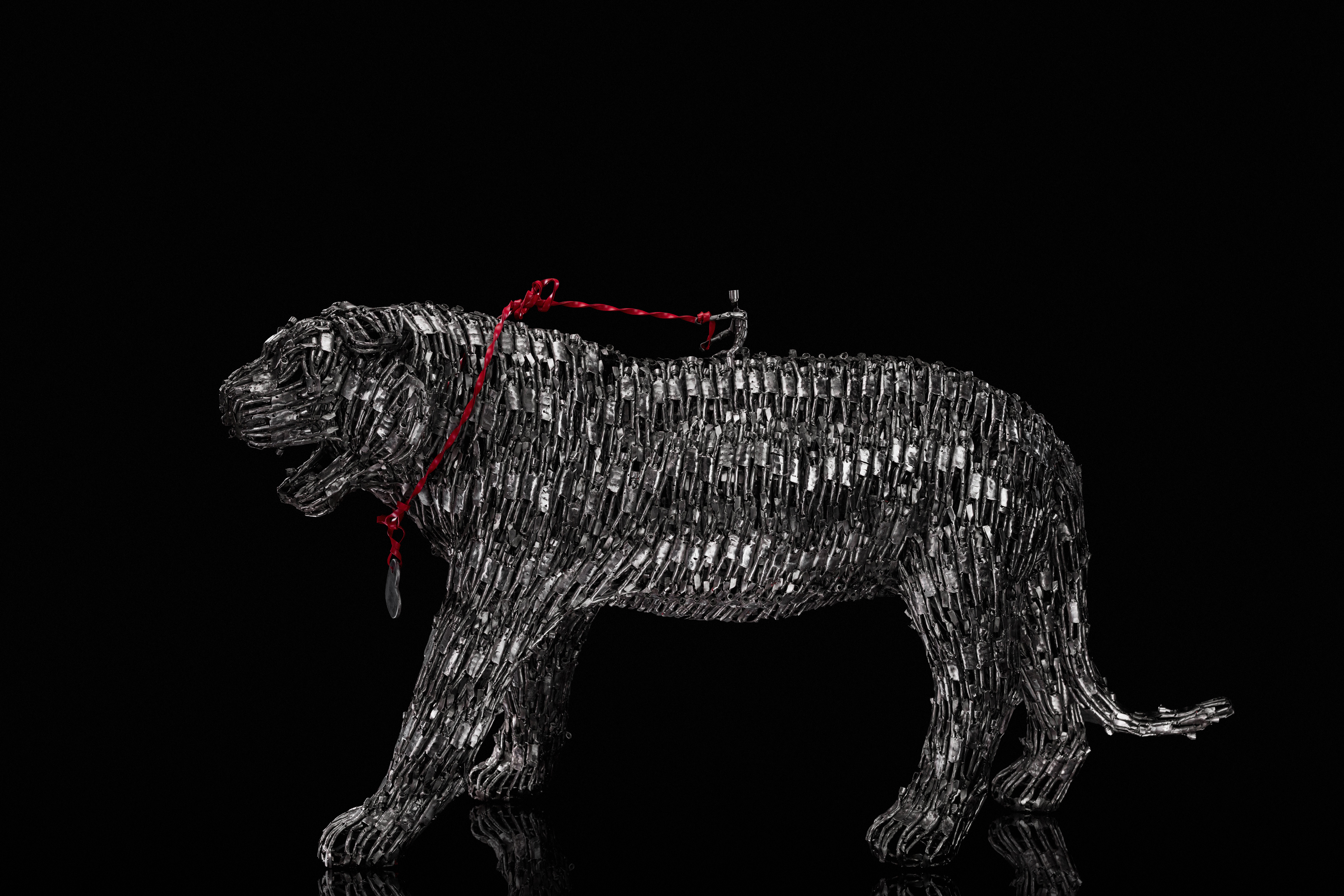
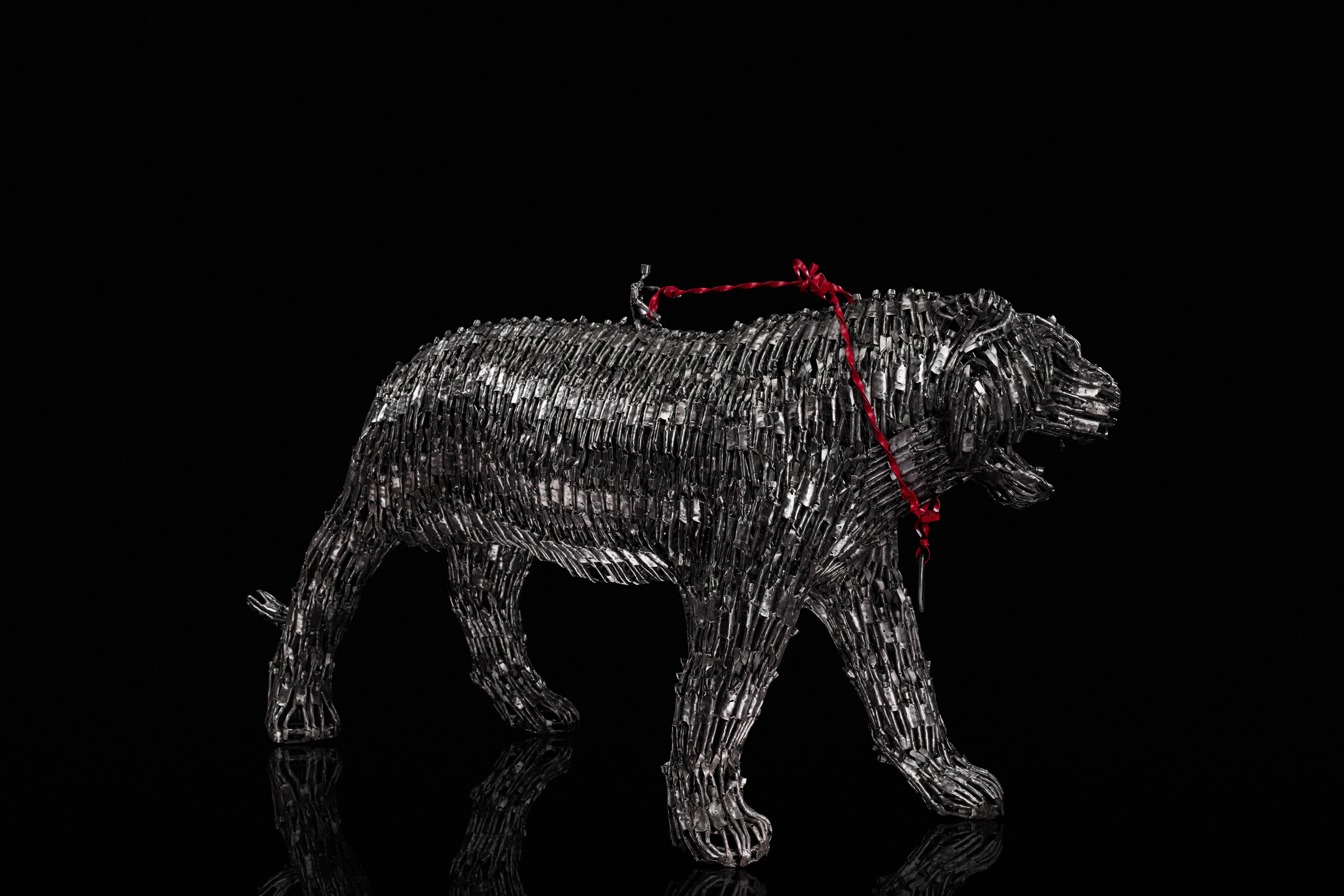
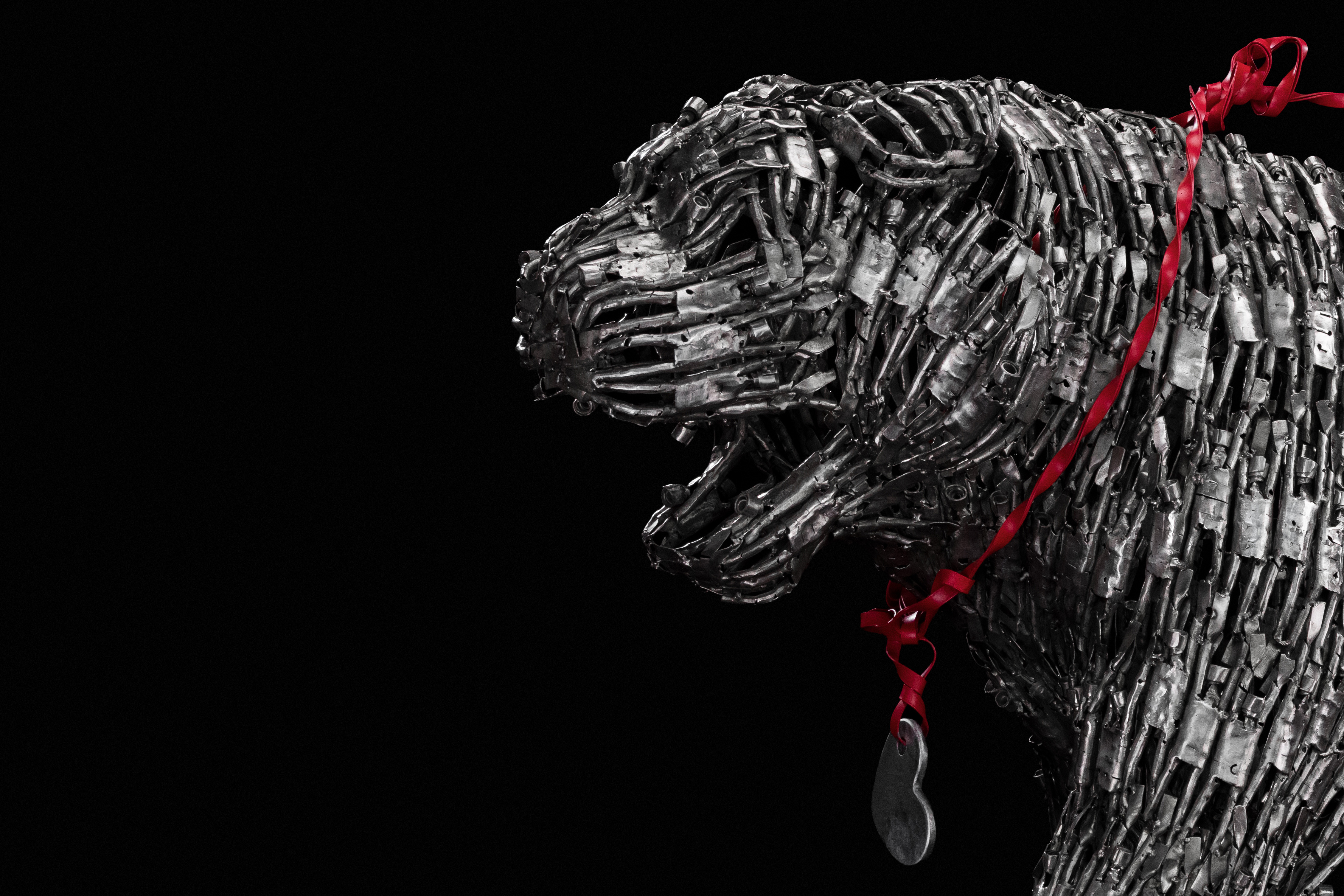
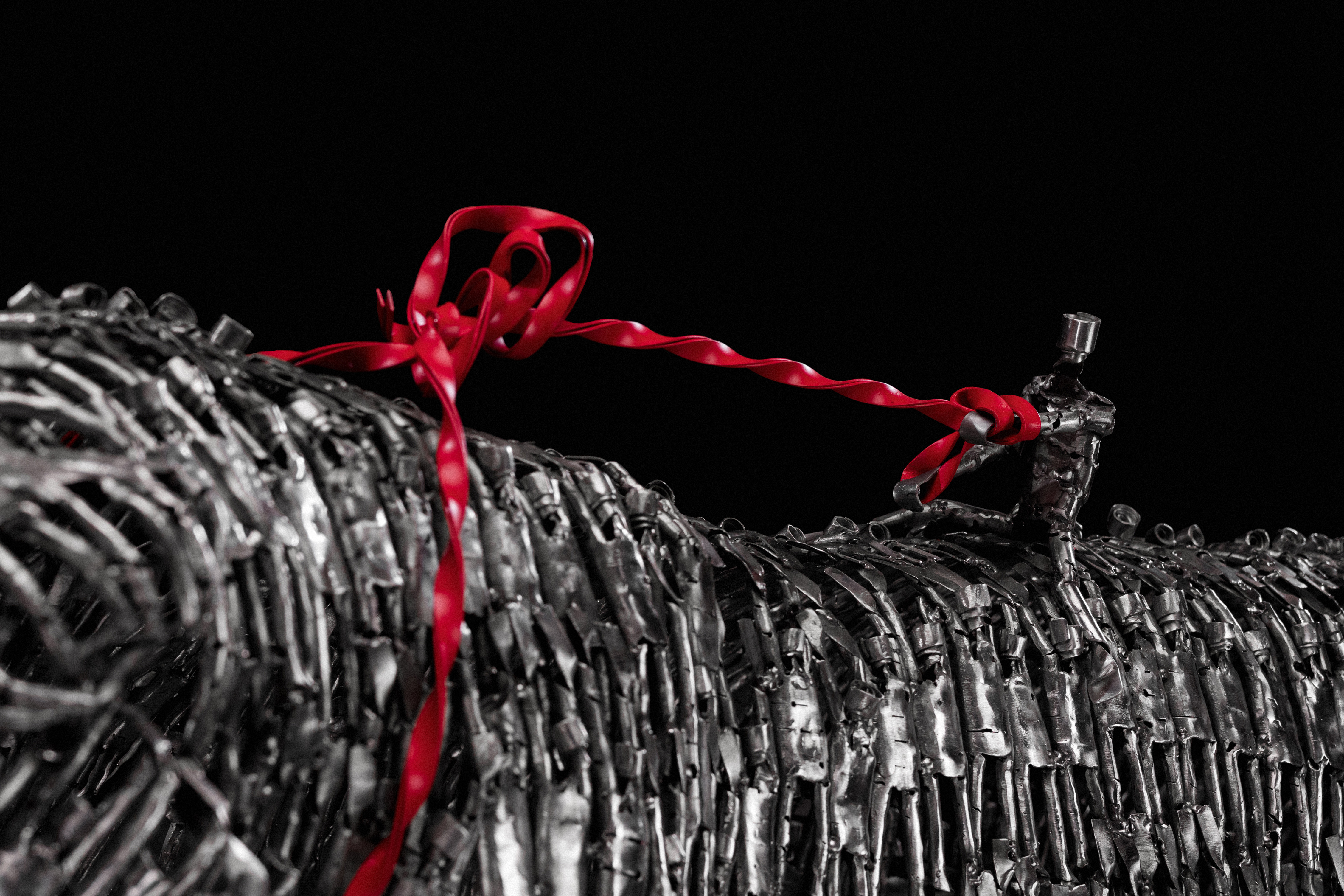
Redy Rahadian constructs the tiger as a body of accumulated human presence. Thousands of his recurring figures are welded into the animal’s musculature, turning an image of solitary power into something fundamentally collective. The tiger retains its associations with instinct, vigilance, and force, yet its strength is no longer understood as purely individual. It is formed through the compression of many bodies into one direction, suggesting that power becomes consequential only when its separate energies begin to move with purpose.
Alone figure sits above the tiger, connected to it through a red rope thattravels across the body and descends toward a heart shaped pendant. The linedoes not simply restrain the animal. It establishes a relationship betweeninstinct and intention, between physical force and emotional orientation. Thefigure does not erase the tiger’s nature but gives its energy a course. In thissense, alignment is not obedience. It is the condition in which instinct,discipline, and feeling cease to compete with one another. Instinct, Alignedproposes that strength reaches its fullest form not when instinct issuppressed, but when it is understood, directed, and connected to somethingbeyond itself.

P : +62 8111 0100 917 (Whatsapp)
A : Jl. Kemang Selatan VIII No.2A,
South Jakarta 12730.
A : Jl. Subak Belaki No.60A, Sukawati,
Gianyar, Bali 80582.
H : Monday to Sunday, 10am to 5pm
Download Gallery Profile.png)