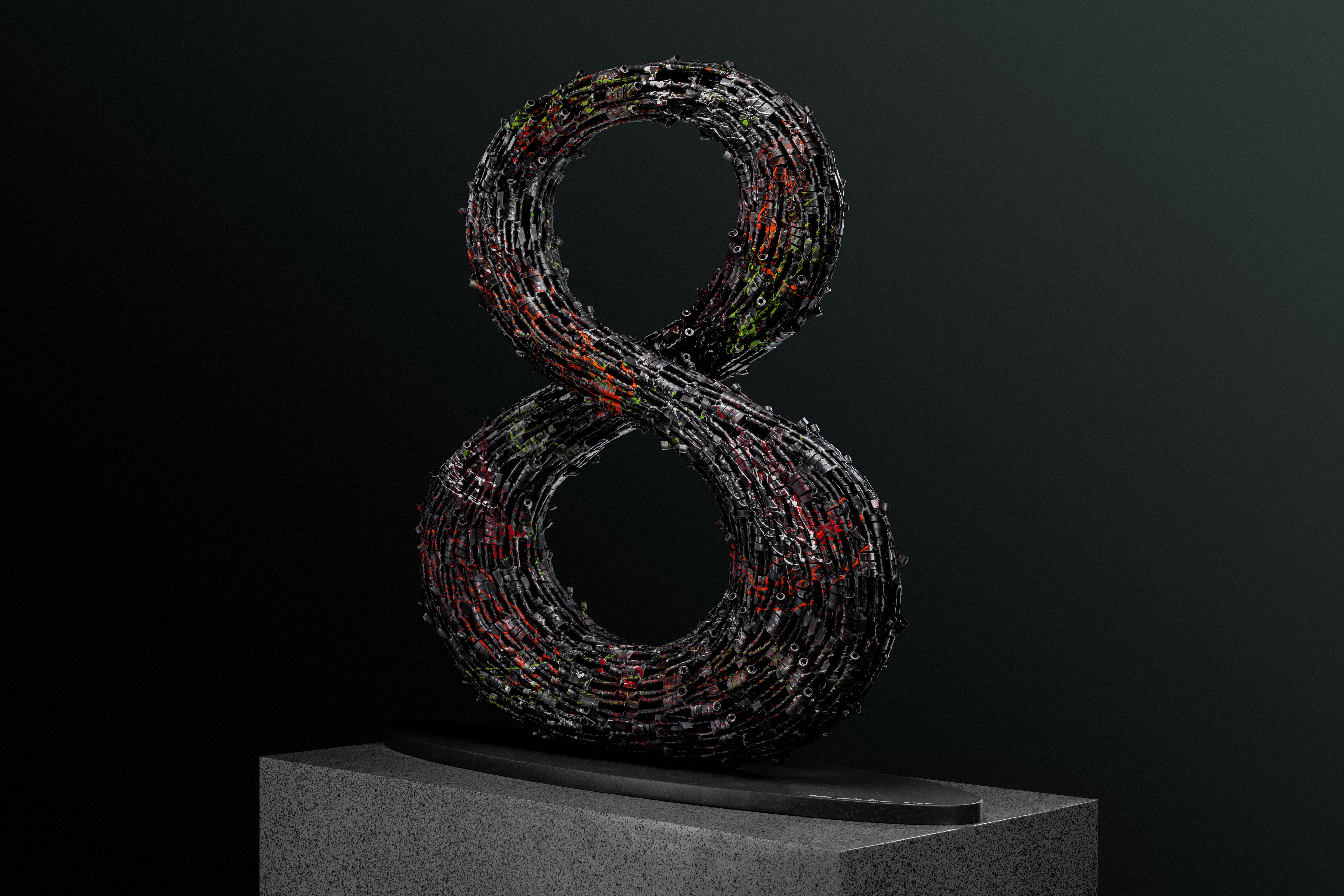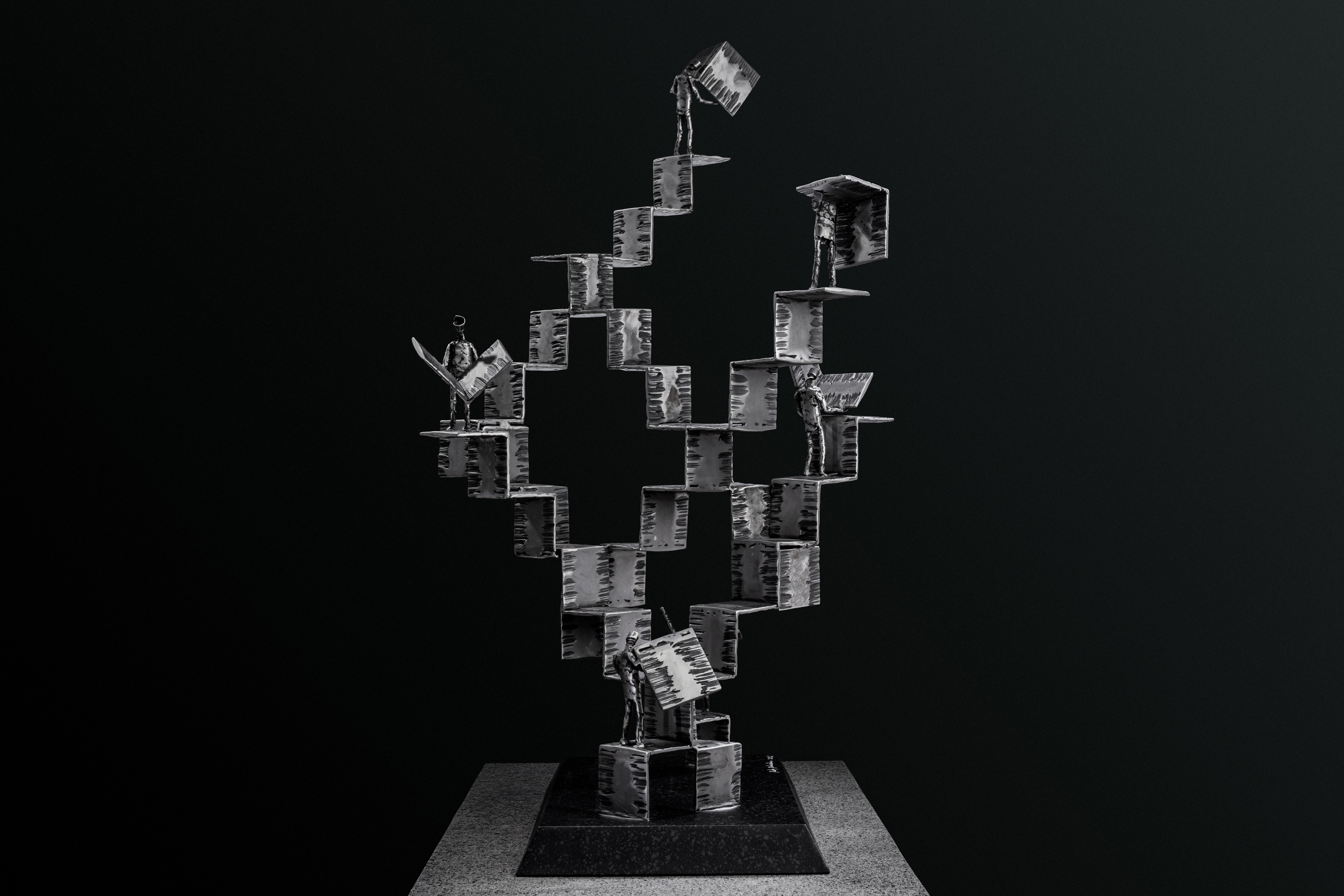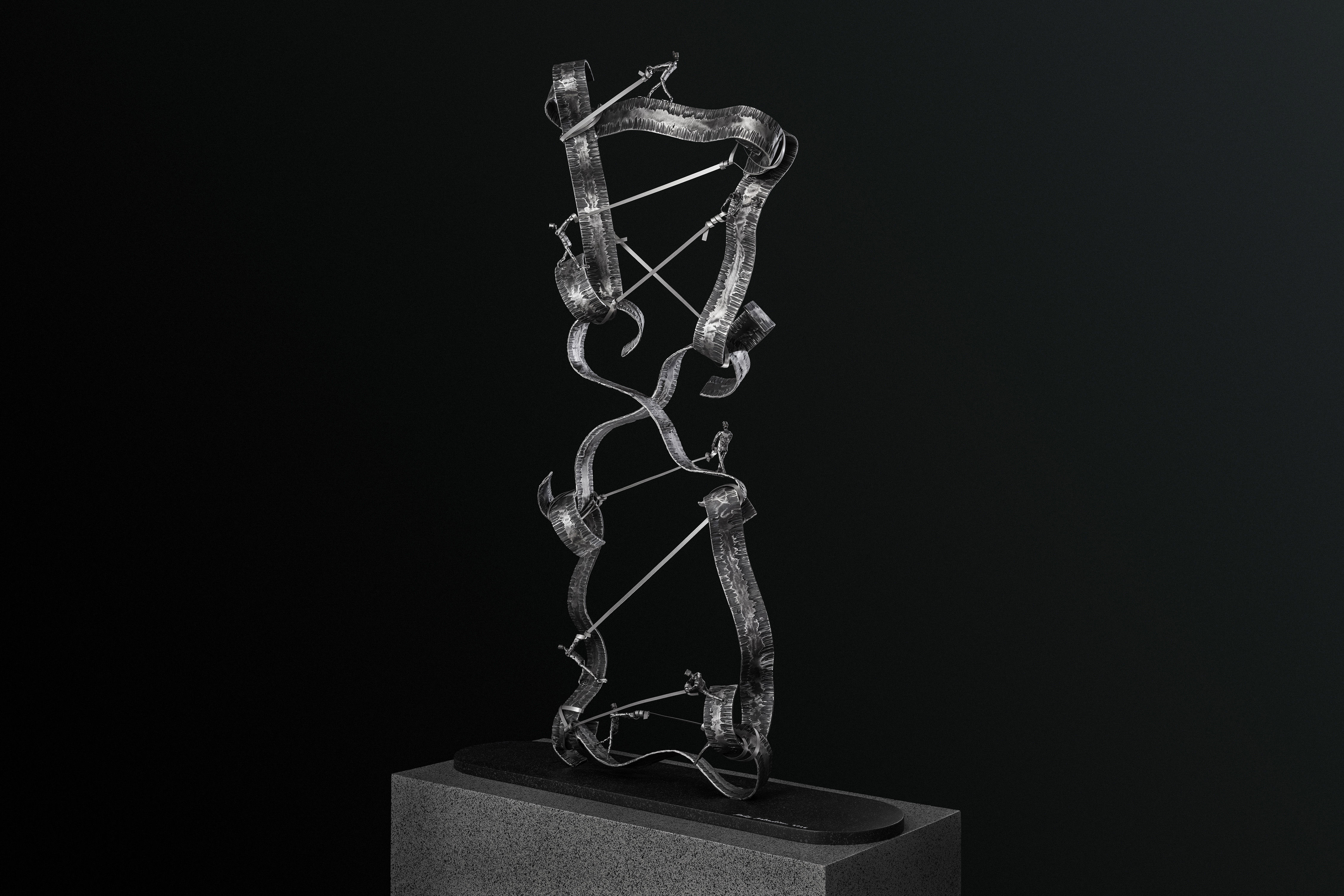
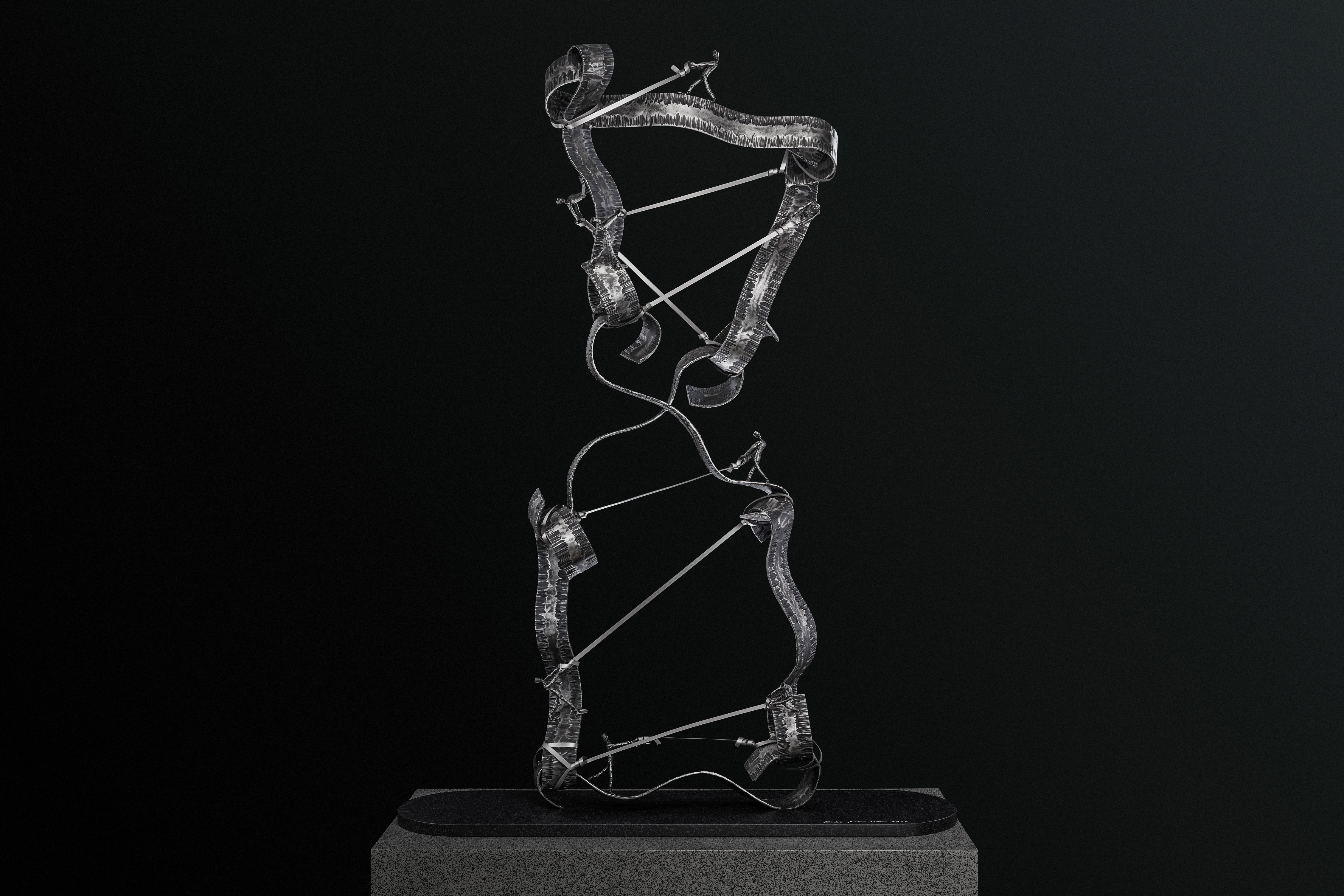
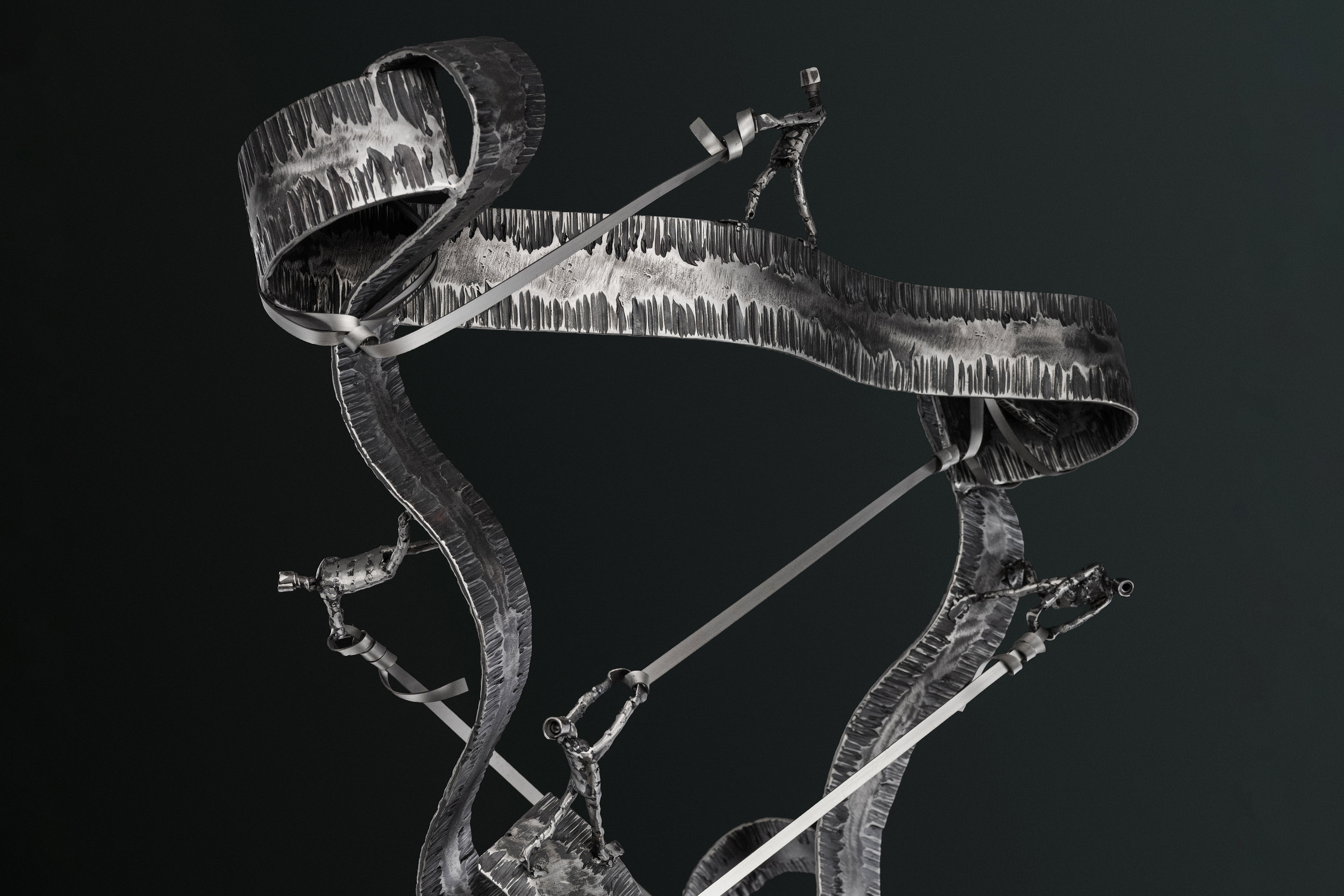
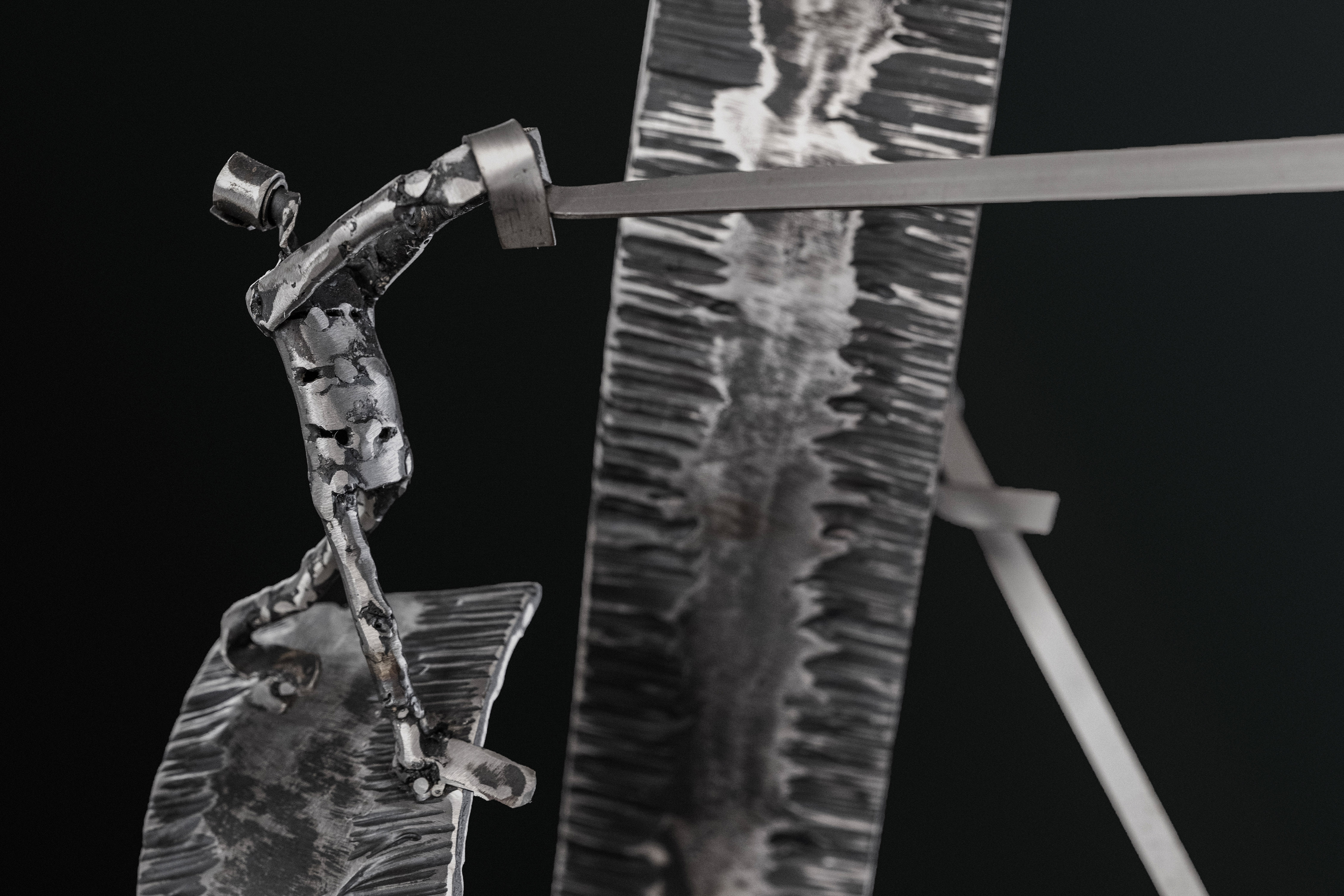
The sculpture constructs balance not as stillness, but as a condition sustainedthrough continuous tension. The sculpture rises through an abstractconfiguration that subtly recalls the number eight, a form associated withrecurrence, continuity, and infinity. Eight metal sheets bend, separate, andreconnect across the vertical composition, while eight human figures pull uponeight ropes from different positions. No single element appears entirelyautonomous. Each force is answered by another, turning the sculpture into asystem of dependencies in which stability emerges from opposing directionsrather than from structural symmetry.
Therepeated presence of eight becomes more than a numerical device. It establishesan internal rhythm between matter, human agency, and restraint. The figures donot simply control the metal forms, nor are they overwhelmed by them. Instead,they participate in a perpetual negotiation of weight and force. Equilibriumproposes that balance is never passive or permanently achieved. It is somethingcontinuously produced through adjustment, resistance, cooperation, and tension.What appears precarious remains standing precisely because every element isimplicated in holding the others in place.

P : +62 8111 0100 917 (Whatsapp)
A : Jl. Kemang Selatan VIII No.2A,
South Jakarta 12730.
A : Jl. Subak Belaki No.60A, Sukawati,
Gianyar, Bali 80582.
H : Monday to Sunday, 10am to 5pm
Download Gallery Profile.png)